Adaptation? Adaptability!
Narrative
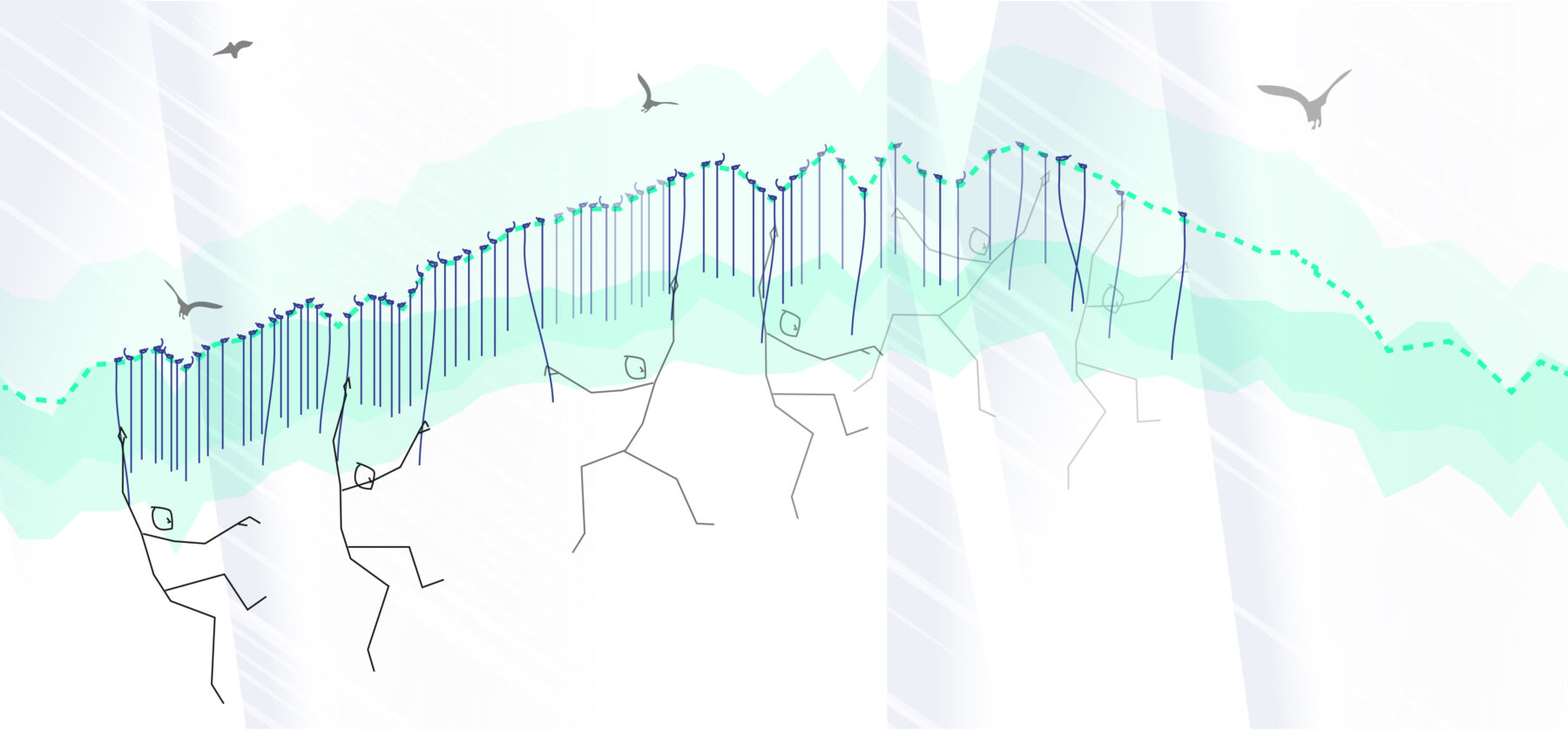
In a world undergoing rapid and multiple upheavals, the question is no longer just one of adapting, but of knowing how to remain adaptable. Adaptation refers to a targeted response to a given situation: we adjust our behaviors, our infrastructure, and our buildings to correspond to a new state of the world. This logic works if the environment remains relatively stable after the change. But in a context marked by multiple crises—where climate hazards, economic instability, geopolitical tensions, pandemics, and social crises are intertwined—adaptation quickly becomes obsolete. We cannot make lasting adjustments to a situation that is constantly changing.
Applied to human societies, this reasoning leads us to value adaptability as a collective skill. This means cultivating room for maneuver rather than eliminating everything “superfluous,” favoring plurality of approaches rather than uniformity, and accepting uncertainty as a given rather than an anomaly. Adaptability is the construction of shared resilience, which allows us to face an uncertain future without pretending to control it completely. Ultimately, where adaptation aims at one-off control, adaptability involves the art of constant steering. It calls for a review of our priorities and a renunciation of the obsession with immediate performance. It is about investing in learning, cooperation, and flexibility, which form the basis of robustness. In a world in perpetual imbalance, true sustainability lies less in adaptation than in adaptability.
Thus, in urban planning as in construction, aiming for adaptability does not mean responding in an optimized way to a single scenario, but rather integrating principles such as flexibility and scalability of uses, in order to adjust to changing needs and conditions; redundancy, in order to better cope with energy shortages and fluctuations; and finally, resilience to climatic extremes, by relying on a variety of solutions—thermal inertia, greening, solar protection, among others.
Bibliography: French researcher Olivier Hamant has written several books on the theme of the robustness of living organisms, in contrast to our societies' pursuit of performance. Olivier Hamant, Antidote au culte de la performance : La robustesse du vivant (Antidote to the cult of performance: The robustness of living organisms), Éditions Gallimard, August 2023, 64 p.
Contribution
From the book "Les 101 Mots de l'Adaptation, à l'usage de tous", under the direction of Atelier Franck Boutté
Title
Adaptation? Adaptability!
Author
Bertrand Béthune, project manager at Atelier Franck Boutté
Editor
Archibooks
Publication date
2022
Pages
176 pages
Illustration
Sébastien Hascoët

Bertrand Bethune
/ Project Manager