Adaptive co-benefit
Narrative
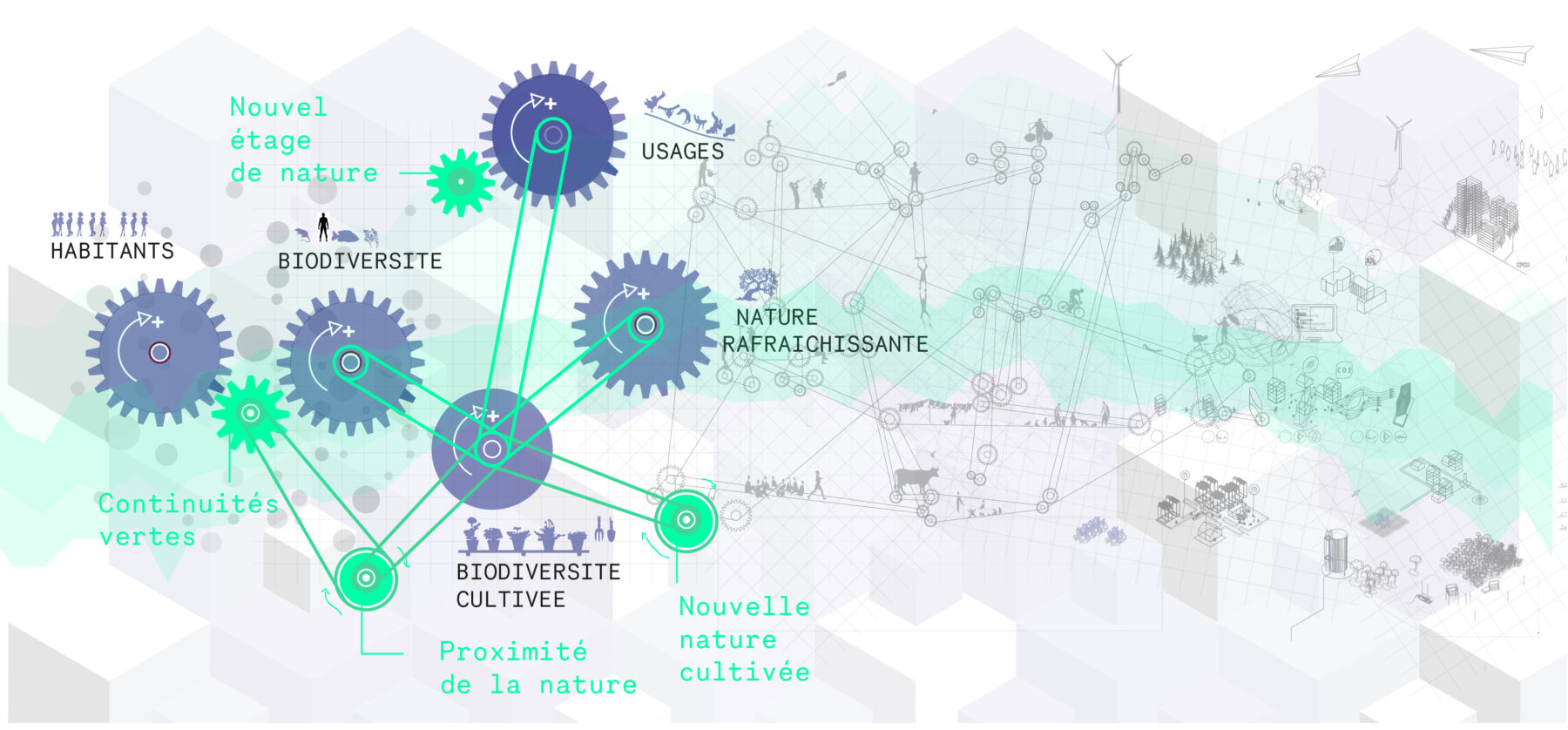
Heat in cities is now the deadliest climate risk in Europe. According to the European Environment Agency, heat waves caused more than 60,000 deaths on the continent during the summer of 2022. Faced with this threat, local authorities are seeking to implement solutions to cool urban areas. But adapting cities to heat cannot be done at the expense of other risks.
Adaptation must be multi-risk, designed in line with all of the vulnerabilities of the territory. Reducing the health impact of urban heat must become a lever for limiting other risks linked to climate change: flooding, loss of biodiversity, resource depletion, social tensions, etc.
Take, for example, a site exposed to both summer overheating and the risk of flooding. The aim is not to treat these two issues separately, but to seek hybrid solutions that limit them both. A network of vegetated swales, for example, can absorb rainwater during extreme events while irrigating plants to prevent water stress. A renaturalized watercourse can absorb floods while providing daily cooling. In this way, the same infrastructure becomes a tool for cross-resilience, useful in cases of both drought and flooding.
Thinking about heat adaptation in cities therefore means thinking in terms of complexity and accepting that we need to move away from single-risk solutions, which are sometimes attractive but ineffective. Adaptation will only be resilient if it is multifaceted, rooted in local realities, and capable of providing cross-cutting responses.
Contribution
From the book "Les 101 Mots de l'Adaptation, à l'usage de tous", under the direction of Atelier Franck Boutté
Title
Adaptive co-benefit
Author
Léna Savoldelli, project manager at Atelier Franck Boutté
Editor
Archibooks
Publication date
2025
Pages
176 pages
Illustration
Sébastien Hascoët

Léna Savoldelli
/ Project Manager