Economy
Narrative
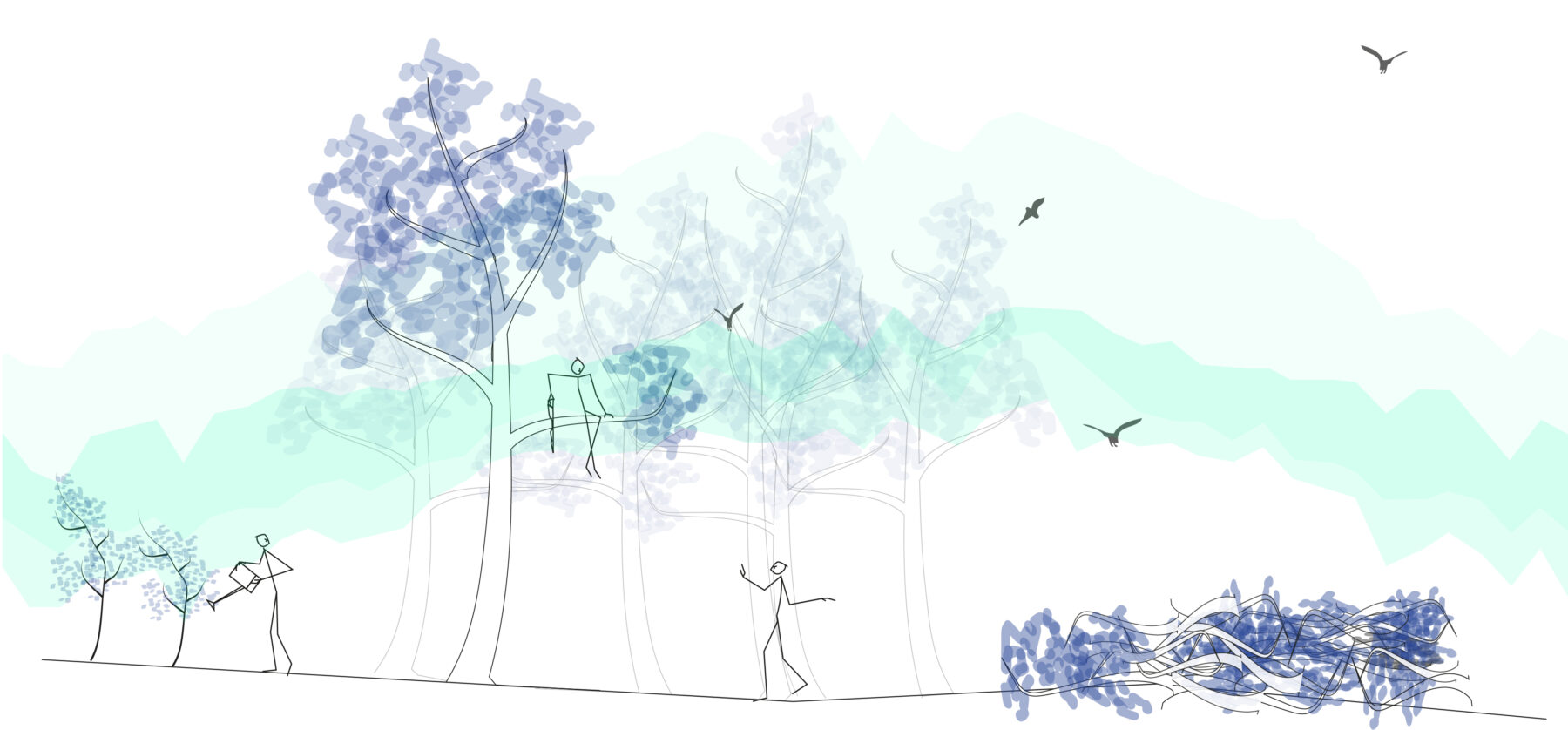
Adapting our cities and regions to tomorrow's climate is not just a technical issue: it is an economic challenge. The economic system of adaptation refers to all the mechanisms—financial, institutional, and cultural—that make this transformation possible in the long term. The challenge is to shift the focus of adaptation from cost to value: recognizing that investing today means avoiding losses tomorrow. An urban canopy, a resilient water network, or a dike are not expenses, but insurance against future heat waves, floods, or droughts.
For these investments to become sustainable, appropriate economic models must be devised. Shifting from a one-off expenditure approach to a service approach allows costs to be smoothed out and private funding to be attracted. A green roof can thus be managed not as an isolated project, but as a cooling and biodiversity service—cooling as a service—maintained over time. A mobile dike can be financed over several decades through an availability contract. These approaches are giving rise to a genuine resilience economy, where co-benefits—health, comfort, attractiveness, property value—are finally taking on economic weight.
Insurance plays a key role here: every euro invested in adaptation reduces future claims and can translate into lower premiums. Some companies are already experimenting with resilience bonds, which bring together investors and local authorities: if disaster is averted, the premium saved is used to repay the work. Adaptation thus enters the financial language, where the value of the future is translated into present cash flows.
But these models remain locked into an economic system that is still largely based on the short term. A legacy of extractive capitalism, it favors quick returns and a consumption of resources that has already exceeded several planetary boundaries: climate, biodiversity, soil, water, pollution. Yet adapting a society with the tools that made it vulnerable in the first place would be a paradox. Building dikes, transforming cities, strengthening networks—all of this consumes concrete, copper, and steel. If adaptation reproduces the logic that created the crisis, it will only shift it elsewhere.
Successful adaptation therefore requires rethinking the system itself: broadening the concept of value, strengthening collective resource management, and integrating ecosystems into our institutions. Some countries have already recognized the rights of rivers and forests, affirming that nature can be a subject of law. Imagining tomorrow that the Seine or the Rhône will defend their survival before the law means admitting that adaptation is not only a matter of financial balance sheets, but also of our collective rules of the game.
Contribution
From the book "Les 101 Mots de l'Adaptation, à l'usage de tous", under the direction of Atelier Franck Boutté
Title
Economy
Author
Elie Getz, chief executive at Atelier Franck Boutté
Editor
Archibooks
Publication date
2025
Pages
176 pages
Illustration
Sébastien Hascoët

Elie Getz
/ Chief executive