Housing
Narrative
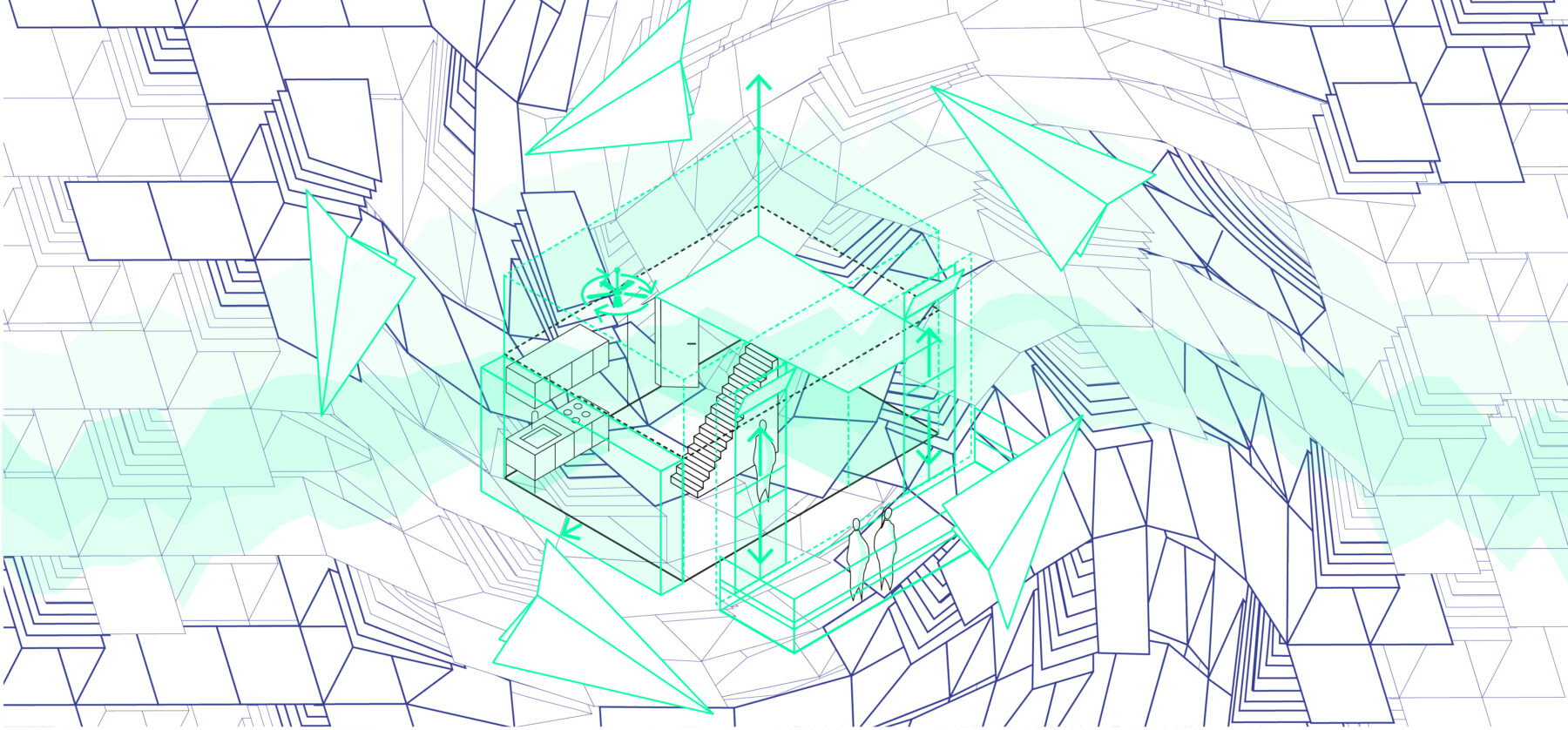
Housing is not only the place where we live, it is the tangible condition of living. Where “living” refers to the experience itself, housing refers to the material, social, and symbolic structure that makes this experience possible. It is the built space—house, building, neighborhood, village—but also what it articulates: our connections, our anchors, our vulnerabilities.
In a world in the midst of reflection, habitat is becoming a central issue. It must protect against hazards without becoming rigid. It must accommodate a diversity of uses while remaining capable of transformation. Housing is an interface: it connects the interior and the exterior, the intimate and the collective, permanence and change. Resilient housing is not just a fortress against storms; it is also a flexible place, open to adjustments, capable of reinventing itself with those who occupy it.
Designing housing therefore means working on a delicate balance: offering stability without denying the need for transformation. In this sense, it is not just a question of technique or architecture, but of ethical and cultural choices. Because housing always reflects a worldview: do we want closed, standardized spaces, reproduced ad infinitum? Or flexible, diverse habitats, designed to accompany real lives and their unexpected events?
The housing of the future will not be that of grand, homogeneous narratives, but a mosaic of adapted spaces, capable of absorbing shocks and sustaining life. A place where our relationship with fragility plays out: a shelter from threats, but also a springboard to other ways of living together. This is where it reveals its full significance: not simply the backdrop to our lives, but a silent actor in our ability to adapt.
Contribution
From the book "Les 101 Mots de l'Adaptation, à l'usage de tous", under the direction of Atelier Franck Boutté
Title
Housing
Author
Tomás Castillo, project manager à l'Atelier Franck Boutté
Editor
Archibooks
Publication date
2025
Pages
176 pages
Illustration
Sébastien Hascoët

Tomás Castillo
/ Project Manager