Hope (The Choice of)
Narrative
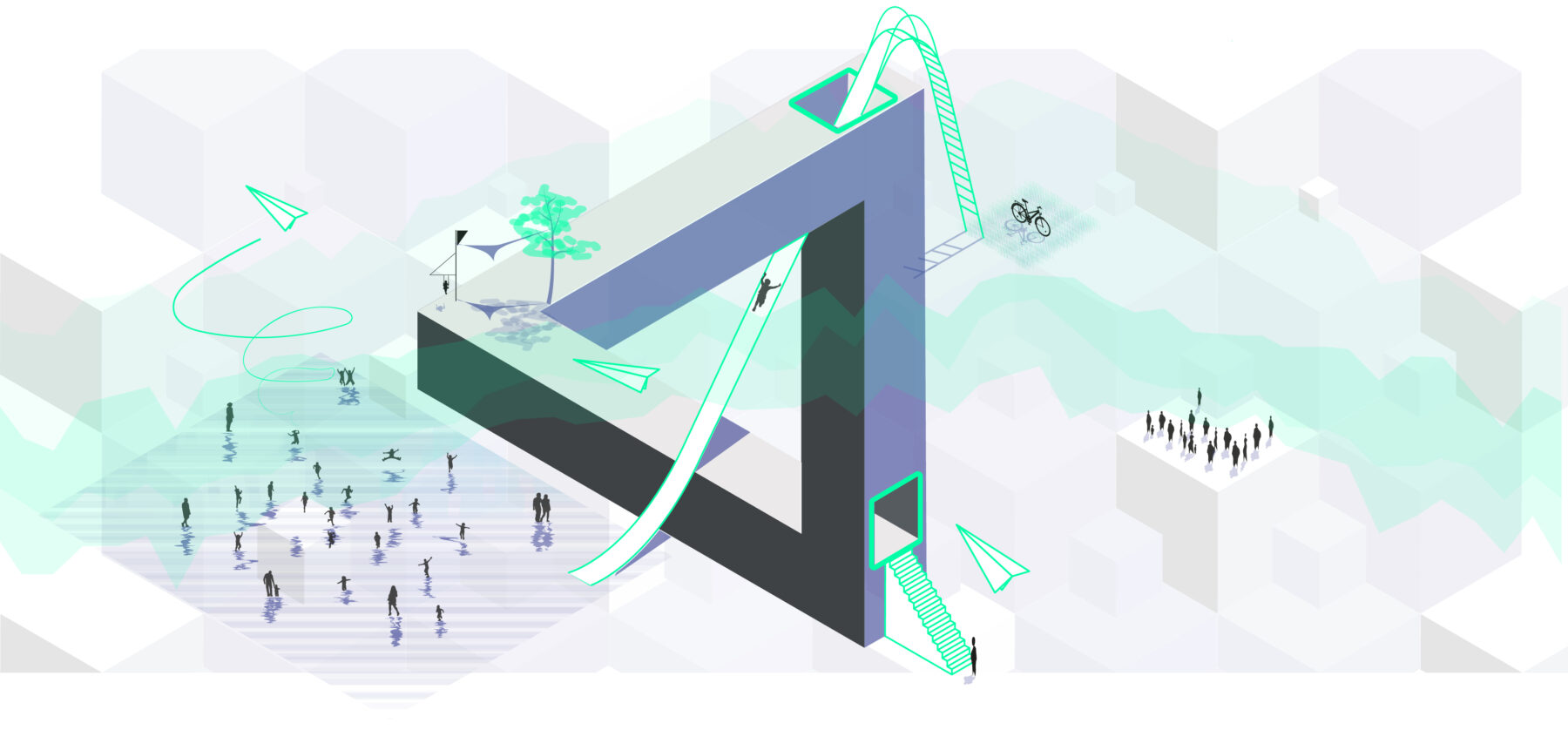
In this age of eco-anxiety and fears of the end of the world, it can seem difficult to feel enthusiastic about “city building.” In the corridors of architecture and urban planning schools, and within construction agencies and companies, the anxiety is palpable and enthusiasm for the profession is waning. How can we continue to build when we know that the construction sector accounts for 43% of France's annual energy consumption and generates 23% of greenhouse gas emissions (source: Ministry of Ecological Transition)? How can we reconcile the housing shortage, the social imperative of providing everyone with a roof over their heads that is adapted to the conditions of tomorrow, and the need to refocus action on existing buildings, while limiting new construction as much as possible? How can we continue to develop and preserve the economic attractiveness of our regions, when we know that urban sprawl is eating away at fertile land—which is a reserve of biodiversity, a source of food sovereignty, and a carbon sink?
Building always has an impact, and artificialization is always devastating. The equation is therefore difficult, even paralyzing. But the worst thing would be to give up, and inaction is not an option.
However, it is possible to take a different view of the times ahead. The constraints imposed on us must be an opportunity to re-enchant our professions.
By embracing the prism of adaptation, city stakeholders have a new mission: to transform positively. Their actions can contribute to the restoration of cities and territories: recreating an altered water cycle, renaturing dead land, revitalizing a watercourse, reweaving broken ecological continuities, rehabilitating a building to give it a second, more suitable life, while honoring the carbon debt it represents.
Today, any impact study (mandatory for urban projects) must announce the measures that will compensate for what a project will alter. Tomorrow, we can hope to imagine and carry out projects for which the projected state will be better than the existing state and will therefore not require compensatory measures.
Optimism is not blindness or naivety. It is the stated desire to succeed in doing better and the necessary substance of commitment.
Contribution
From the book "Les 101 Mots de l'Adaptation, à l'usage de tous", under the direction of Atelier Franck Boutté
Title
Hope (The Choice of)
Author
Franck Boutté, president, and Alix Derouin, director of communications and development, at Atelier Franck Boutté
Editor
Archibooks
Publication date
2025
Pages
176 pages
Illustration
Sébastien Hascoët
Franck Boutté
/ Founding Chairman
Alix Derouin
/ Director of Communications and Development