Uncertainty (Dealing with)
Narrative
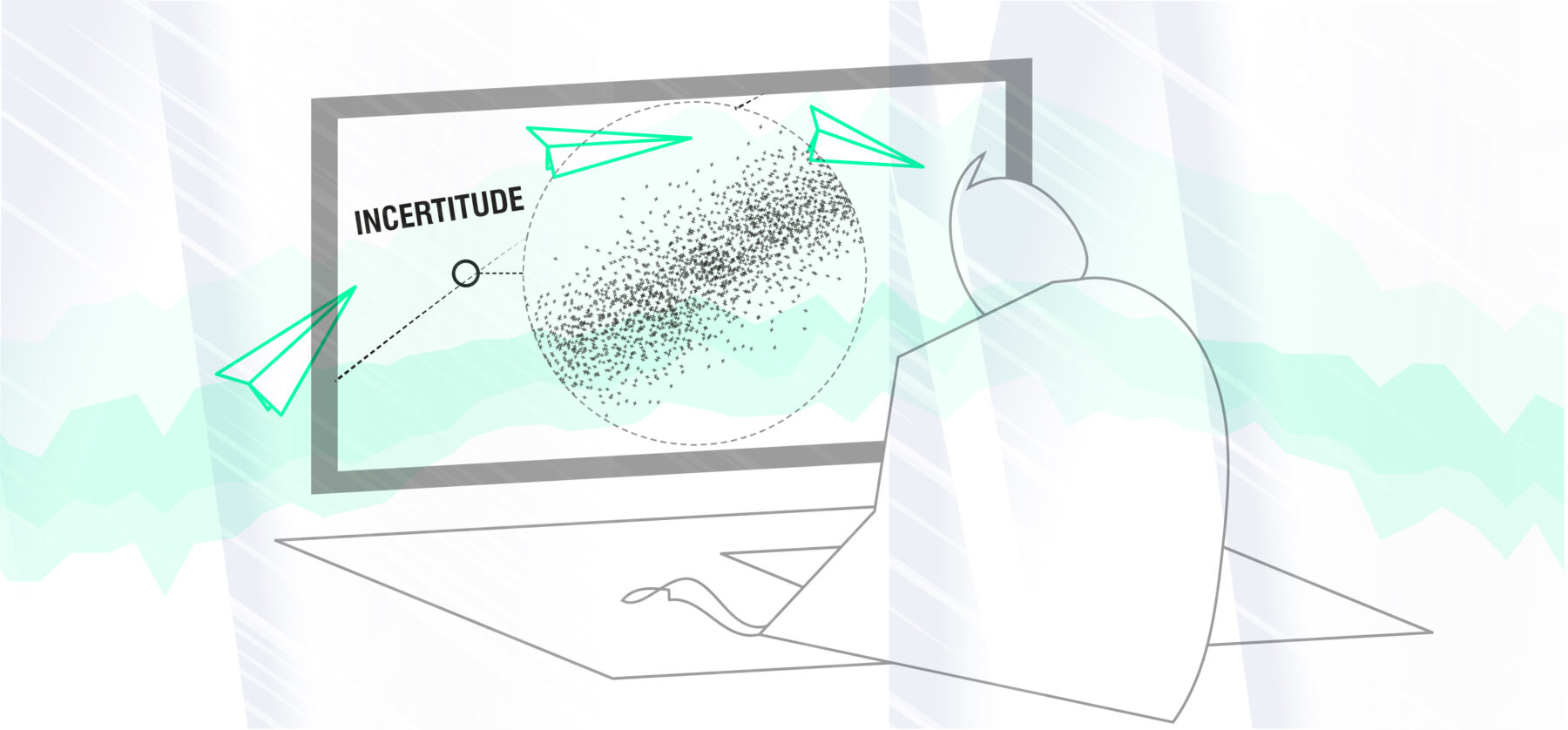
There are two main categories of action when it comes to ecology. The first is mitigation: addressing the causes to minimize the consequences, reducing the impact to bend the curves and move towards less pessimistic trajectories. In France, for years, we have relied on mitigation to “combat” climate change—as if it were a battle that could be won. But this is not the case. The phenomena at work have been going on for too long and are reinforcing each other, and the inherent time lag means there is no going back: what we are experiencing today is the consequence of decisions (or non-decisions) made yesterday or the day before, and the decisions we make today will only have results tomorrow or the day after... at best. From now on, climate change is here to stay; all IPCC scenarios predict an increase in temperatures regardless of the measures that will be put in place. The second category of action is therefore adaptation. Of course, we must continue to do our utmost in terms of mitigation, reducing our gray energy and carbon footprint, etc., in order to put ourselves on the least harmful trajectory. However, the time has come to “adapt” to the inevitable.
This new situation represents a real paradigm shift. Until now, city stakeholders were asked to be good “foresighters,” capable of representing the future reality as accurately as possible, based on known data from the past and present—since data about the future, at least from a climate and environmental perspective, had always been more or less the same. Today, we must become reasonably good “prospectivists,” in the sense of anticipating future living conditions as accurately as possible, based on data that is not fully known but can be partially predicted.
This approach requires new ways of working in order to deal with uncertainty. It requires working on the basis of hypotheses, seeking consensus on the “project” for the future on which to collectively align ourselves; it requires developing a culture of real-time evaluation in order to make any adjustments that may prove necessary, or even complete reversals; finally, it requires bringing together actors from various disciplines to exchange views and expertise, because no one, from their own point of view, from their own position and from their own time frame, can embrace the complexity of the phenomena at work.
We must therefore learn to live with uncertainty. This new input into the fabric of the city involves a certain amount of discomfort and “endangerment”—if only because it is not part of our culture, which is ill-suited to risk-taking, as evidenced by our insurance system. Nevertheless, it can become a real field of investigation and invention, closely linked to a reality in flux. And it can encourage us to remain “alert,” an essential attitude in the face of the upheavals at work.
Contribution
From the book "Les 101 Mots de l'Adaptation, à l'usage de tous", under the direction of Atelier Franck Boutté
Title
Uncertainty (Dealing with)
Authors
Franck Boutté, president, and Alix Derouin, director of communications and development, at Atelier Franck Boutté
Editor
Archibooks
Publication date
2025
Pages
176 pages
Illustration
Sébastien Hascoët
Franck Boutté
/ Founding Chairman
Alix Derouin
/ Director of Communications and Development