Who? When? What? Where?
Narrative
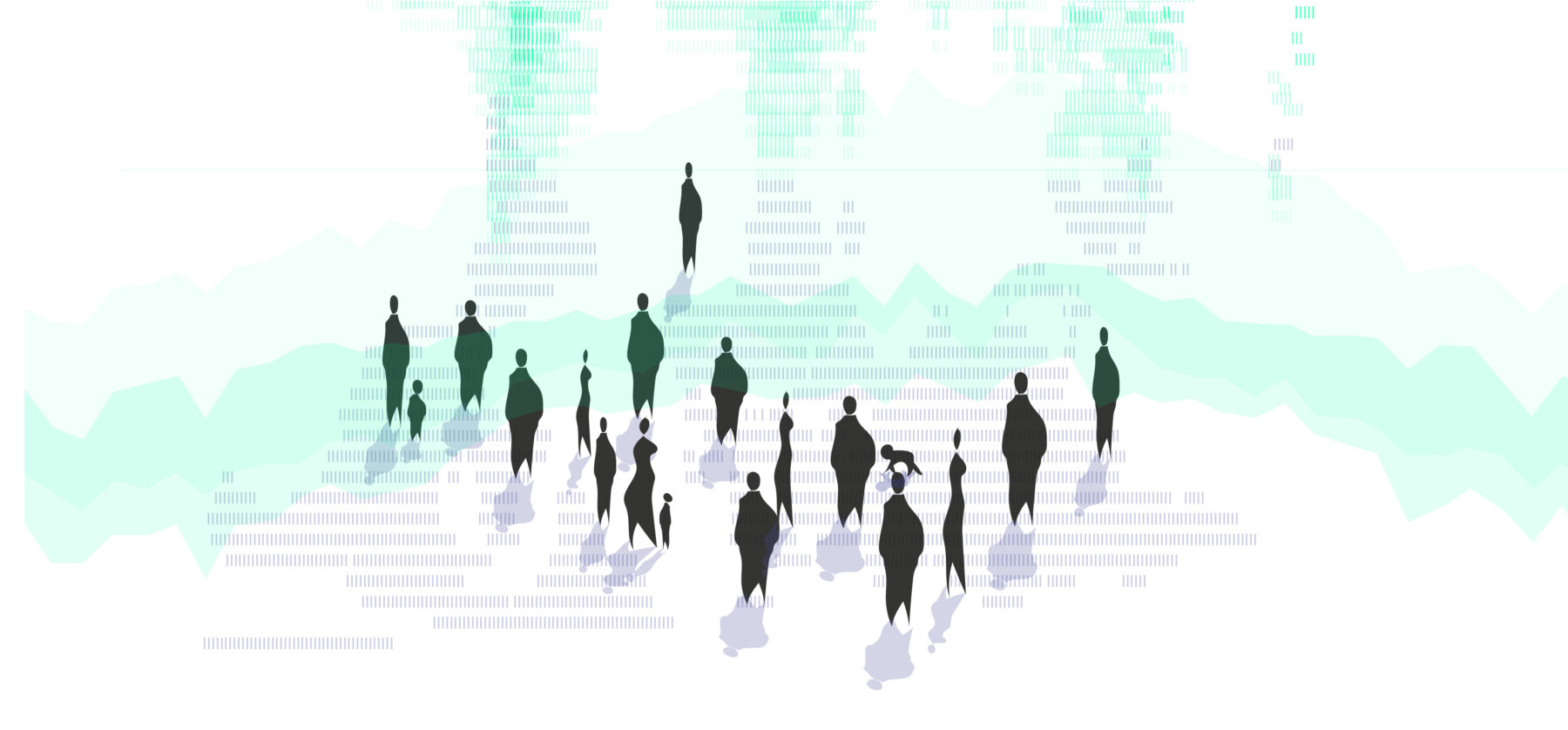
Who are we adapting for?
This should always be the first question.
For everyone, of course.
But not everyone is equally equipped to deal with risks, particularly the risk of urban overheating, which is currently the most deadly risk in Europe. Climate vulnerability depends on the physical environment, but also on the social environment and our own physical condition.
Adapting therefore means rebalancing climate inequalities, because development is never neutral: it either includes or excludes. This requires a detailed understanding of living situations, real needs, everyday vulnerabilities, and so on.
But what are we adapting to?
To a single risk? To all risks?
To heat in cities, of course. But also to drought, heavy rainfall, pressure on resources, increased inequalities, and so on.
Faced with multiple threats, our responses must be cross-cutting.
A green street should not only cool the area: it should absorb water, reduce noise, welcome wildlife, and create links between residents.
Each solution must have co-benefits in order to be sustainable and resilient.
But to achieve this, we need to have a precise understanding of our territories: their soils, their flows, their uses...
When should we adapt?
What timeframe should we respond to? Is adapting to 2050 enough? Is it responsible?
When the TRACC forecasts +2.7°C in 2050 and +4°C in 2100, we are no longer talking about the same climates, the same cities, or the same ways of living.
Solutions adapted to 2050 may, or rather will, be obsolete in 2100. And yet, what we build today will remain tomorrow.
So what kind of future do we want to be shaping? Let's dare to think further ahead and anticipate what comes next.
And where do we adapt?
On what scale? And how do the scales relate to each other?
Thinking about adaptation means thinking in terms of interconnections, between the local and the global, between the invisible and the tangible.
A naturally ventilated building is not enough if hot air stagnates around it; a cool street has no effect if, a few meters above, air conditioners are releasing their heat.
No scale can be considered in isolation: territories, neighborhoods, public spaces, buildings, and users must all interact.
Otherwise, each solution becomes an isolated island in a system that continues to overheat.
Contribution
From the book "Les 101 Mots de l'Adaptation, à l'usage de tous", under the direction of Atelier Franck Boutté
Title
Who? When? What? Where?
Author
Léna Savoldelli, project manager at Atelier Franck Boutté
Editor
Archibooks
Publication date
2025
Pages
176 pages
Illustration
Sébastien Hascoët

Léna Savoldelli
/ Project Manager