UCPA Ecological Transition Strategy
International
2023
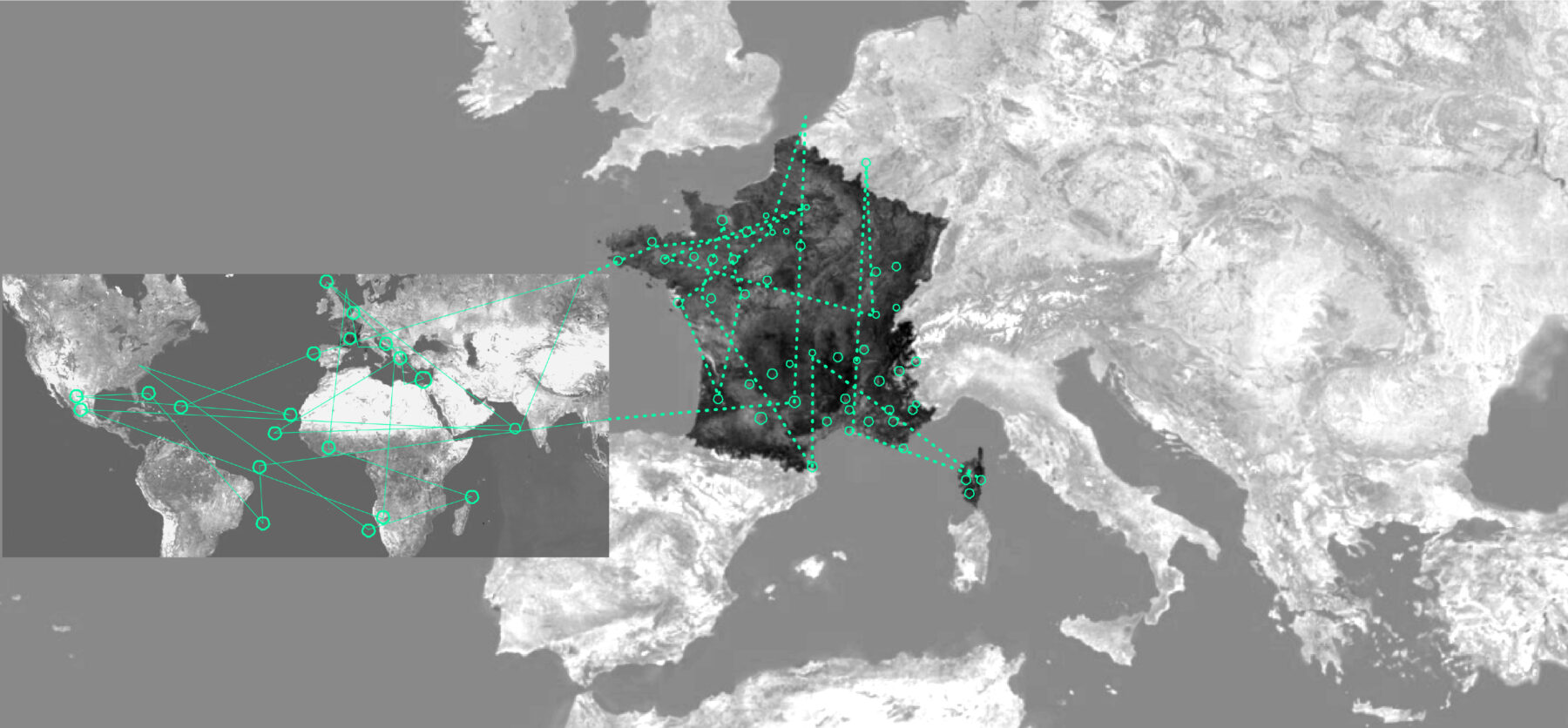
Across UCPA's network of sites in France and abroad, this commission focused on developing an ecological transition strategy tailored to the organisation's operational facilities. The objective was to provide UCPA with an internal decision-support framework that could be directly used by site managers to assess environmental priorities according to each site's characteristics, programme, territorial context and practical capacity for action.
The ambition was to establish a shared methodology—both strategic and operational—that would help prioritise environmental issues, support the organisation's investment committee in its decision-making, and guide projects over time, from the earliest strategic orientations through to environmental self-assessment.
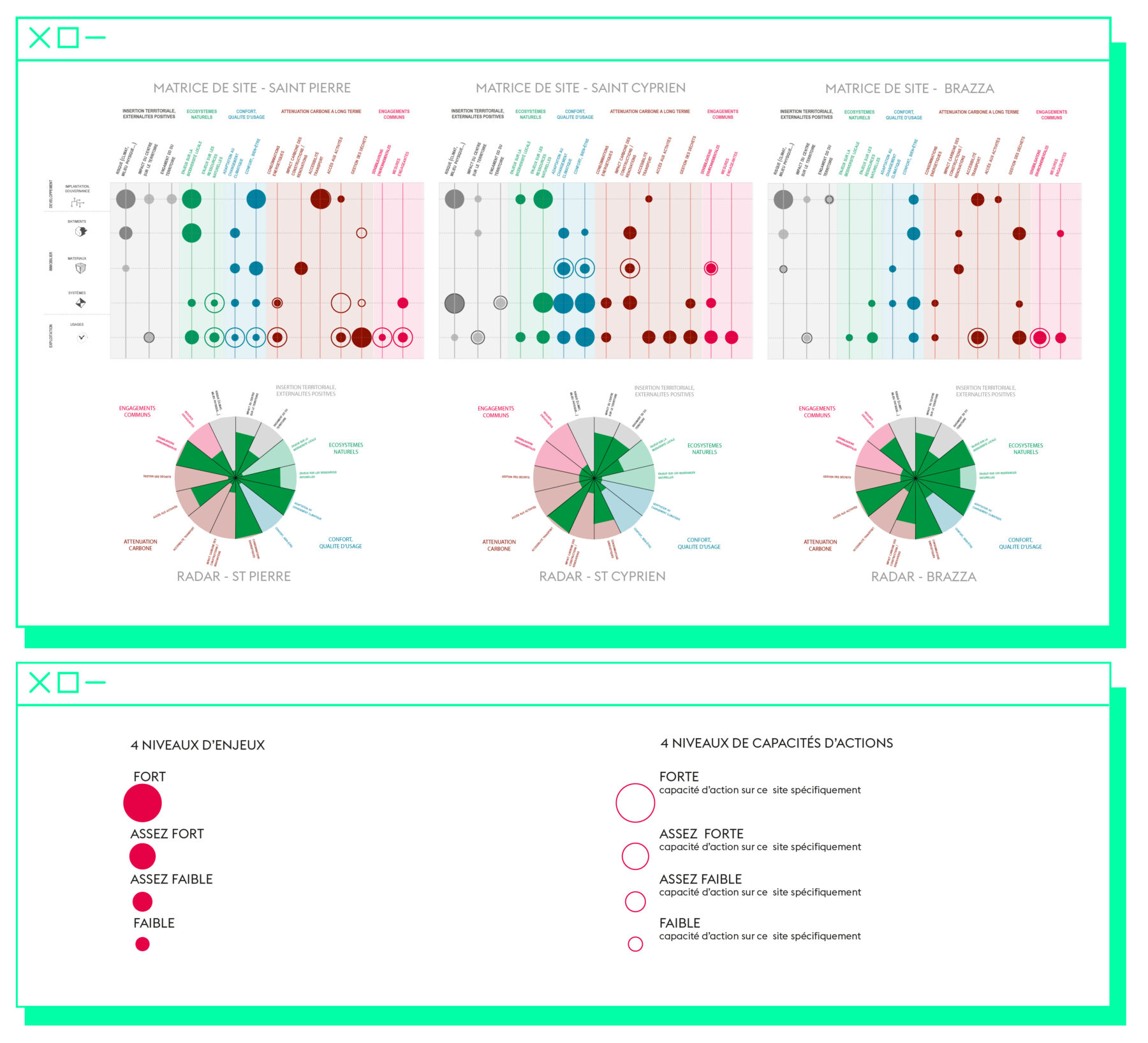
The approach began with a detailed environmental assessment of a representative sample of eight UCPA sites, capturing the diversity of challenges, opportunities and constraints encountered across the portfolio. The analysis was structured around five ecological transition themes—territorial integration, ecosystems and water resources, comfort and quality of use, carbon mitigation, and shared commitments—and assessed against four levels of criticality to provide an objective basis for prioritising environmental issues.
To translate this analysis into an operational tool, Atelier Franck Boutté developed a site-specific assessment matrix cross-referencing environmental challenges with the organisation's capacity for action across different scales: site planning and governance, buildings, materiality and technical systems, complemented by the cross-cutting dimension of user practices. This framework simultaneously evaluates the significance of each environmental issue and the project's realistic capacity to respond, while accounting for the climatic conditions specific to each site. Identity radar charts complete the methodology by providing a concise overview of each site's strengths and areas for improvement.
Beyond diagnosis, the commission developed a series of "project figures"—a practical design framework that can be readily adopted by UCPA teams. Based on the environmental assessment matrix, site managers can identify priority actions, assess their capacity for intervention and define appropriate operational strategies. Some recommendations are specific to the site under consideration, while others provide transferable references for comparable contexts.
By turning ecological transition into a strategic management tool, the methodology enables UCPA to compare sites across its portfolio, monitor the progress of projects over time and engage teams around shared environmental responsibilities.
Client
Association UCPA Sports Loisirs
Surface
CPA Real Estate Portfolio Across France and Internationally
Schedule
2023
AFB team
Florence Capoulade and Tomás Castillo

Florence Capoulade
/ Project Manager

Tomás Castillo
/ Project Manager