Natural ventilation
Narrative
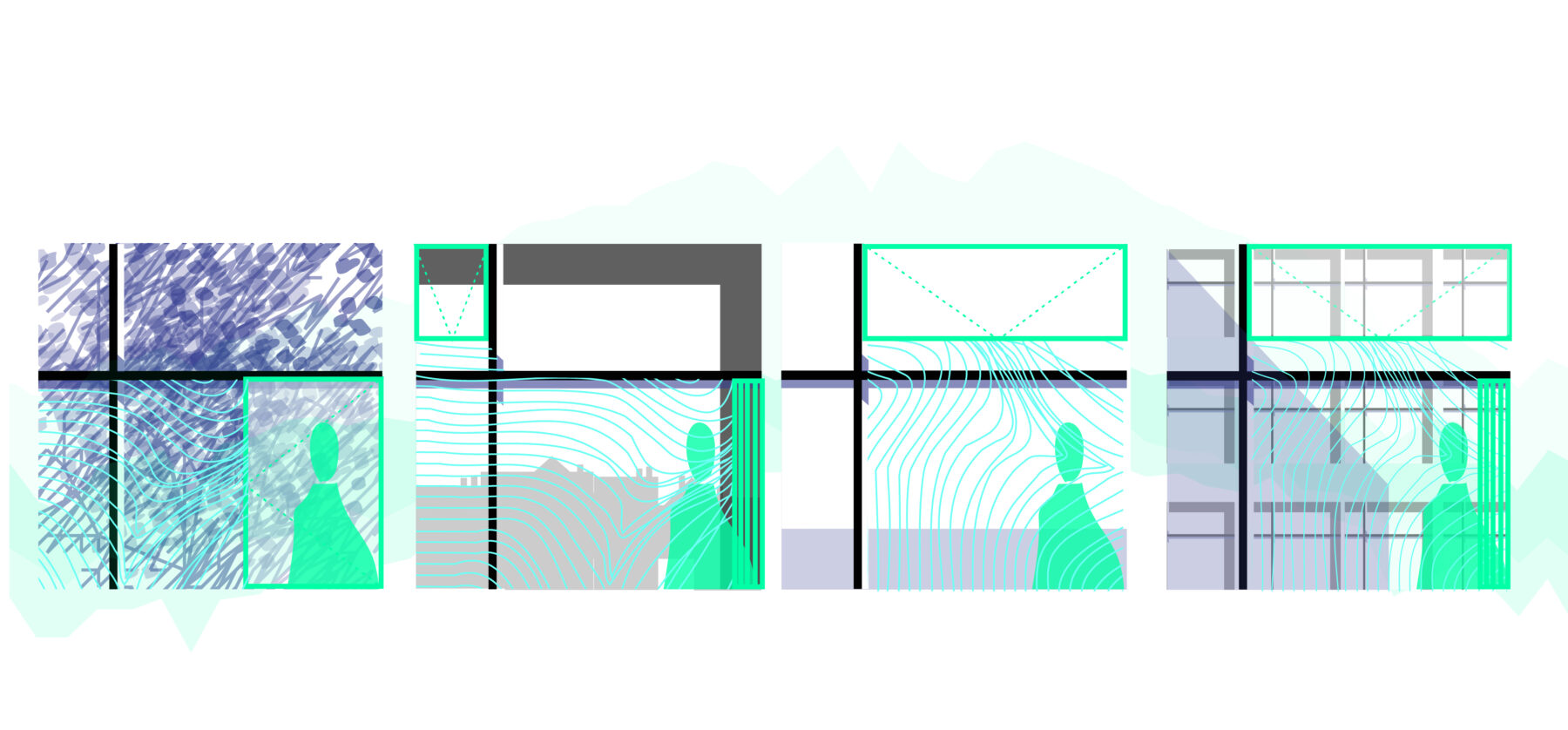
Natural ventilation: breeze or mirage?
Air has always been our primary architect. Long before machines, civilizations learned to harness the wind to cool, purify, and temper their surroundings. Persian wind towers, Andalusian patios, Mediterranean openings: these are all passive devices that, through the sheer intelligence of their design, provided “cool” comfort—without cooling.
Today, architecture is rediscovering this wisdom. A well-oriented window, a double height, a porous facade: cross ventilation is becoming a discreet art, a choreography of air that reduces the need for air conditioning. But the praise cannot be absolute.
Because the wind does not blow everywhere. And while natural ventilation is appealing for its simplicity, it is not always sufficient. Certain climates and certain types of buildings—particularly in dense or humid urban environments—require more precise and constant regulation. Air conditioning is not the devil: when well designed and properly sized, it can become an ally. It can provide occasional support for an overall bioclimatic strategy, rather than a renunciation of it.
It is therefore not a question of pitting nature against technology, but of bringing them into harmony. Of letting natural ventilation take the lead, with machines only coming in as a backup. In this scenario, the architect becomes the conductor, balancing the invisible, orchestrating the flows, and adapting their choices to the context.
Above all, it is about learning to breathe with the times. Because today's air is no longer yesterday's: winds are changing, seasons are shifting, and balances are crumbling. Adaptation is no longer a luxury but a modern wisdom—that of anticipating, adjusting, and hybridizing. Between trust in nature and humility before technology, a new art is emerging: that of respiratory anticipation, where each building learns to inhale what it can from the climate and exhale, with moderation, the help it needs.
Breathing with the climate also means knowing when to compromise with it and when to lend it a helping hand—not to dominate it, but to coexist with it.
Contribution
From the book "Les 101 Mots de l'Adaptation, à l'usage de tous", under the direction of Atelier Franck Boutté
Title
Natural ventilation
Author
Mustapha Ouhimd, project engineer at Atelier Franck Boutté
Editor
Archibooks
Publication date
2025
Pages
176 pages
Illustration
Sébastien Hascoët

Mustapha Ouhimd
/ Project Lead