Open city
Narrative
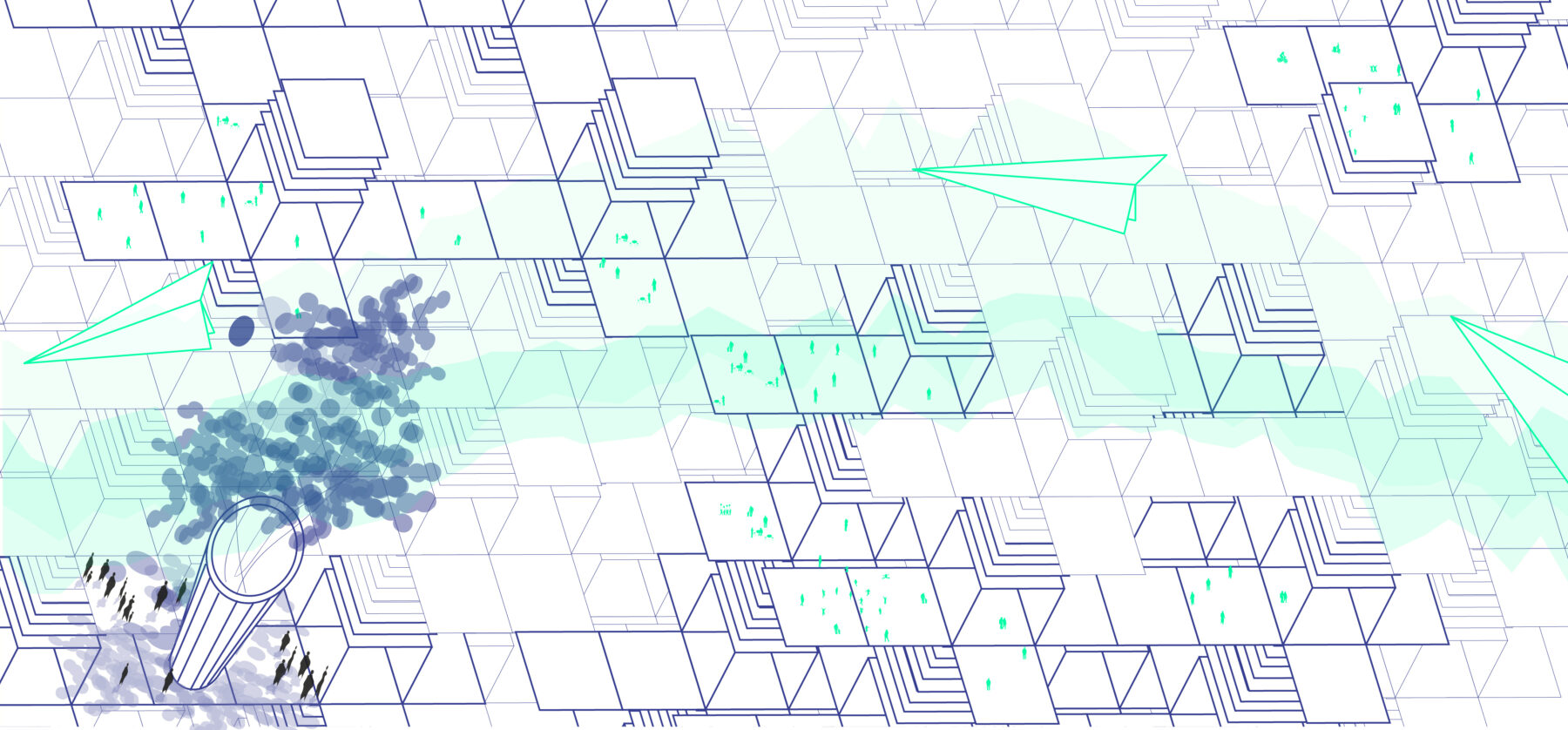
An open city is not a finished plan, nor is it a self-contained architectural structure. It exists in a state of incompleteness, in its willingness to be transformed by whatever happens. It does not impose a single form, but leaves room for the unexpected, for diversity, for uses that are reinvented every day.
An open city does not simply build walls and infrastructure: it cultivates porosity. Porosity between public and private spaces, between generations, between the rhythms of day and night, between nature and the built environment. It accepts that urban life can never be fully controlled, and it is in this uncertainty that it finds its richness.
Climate, social, and economic crises remind us how rigid, meticulously planned cities break down in the face of upheaval. Conversely, an open city bends, adapts, absorbs, and transforms. It does not erect definitive boundaries but offers thresholds to cross, spaces to share, and interstices where the unexpected can blossom.
“Let's open up the city!”, then, to protect without confining, to make diverse lives possible in the midst of shared vulnerabilities.
“Let's open up the city!”, then, as a mechanism of adaptation that becomes a condition of our collective freedom in a world in transition.
Contribution
From the book "Les 101 Mots de l'Adaptation, à l'usage de tous", under the direction of Atelier Franck Boutté
Title
Open city
Author
Tomás Castillo, project manager at Atelier Franck Boutté
Editor
Archibooks
Publication date
2025
Pages
176 pages
Illustration
Sébastien Hascoët
Tomás Castillo
/ Project Manager