Les Magasins Généraux
Le Havre
In progress
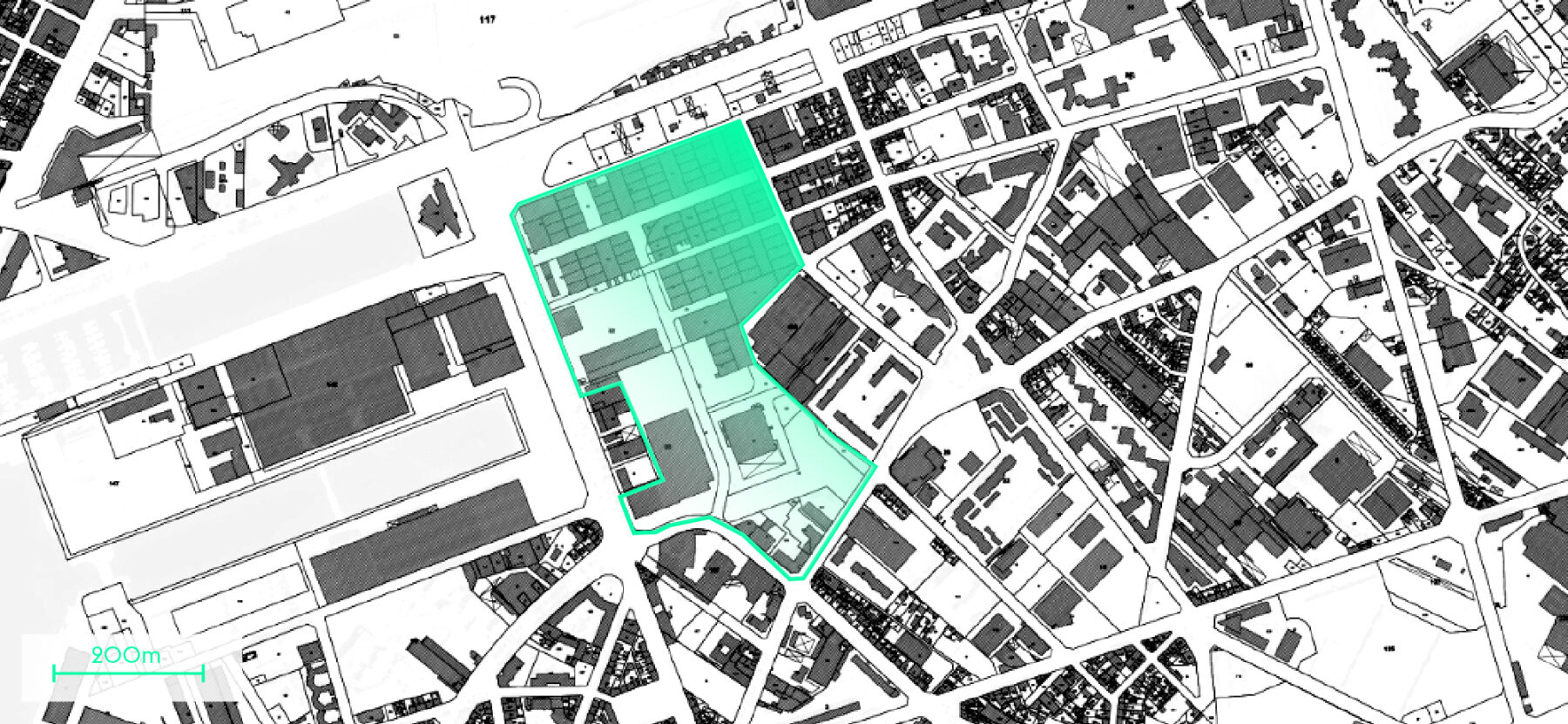
The Magasins Généraux site in Le Havre covers 12.7 hectares at the intersection of several key urban areas: Docks-Frissard, Saint-Nicolas and the city gateway. Long overlooked by major urban regeneration initiatives, the site now represents a strategic opportunity thanks to its location, port heritage and role in connecting the city centre, the harbour and surrounding residential neighbourhoods. Situated in an area highly exposed to sea-level rise and coastal flooding, the project must also address the specific climate vulnerabilities of Le Havre.
The site is characterised by a strong duality. To the north, the former 19th-century warehouses reflect the area's rich maritime and industrial heritage. To the south, a more heterogeneous urban fabric emerged following the destruction caused by the Second World War. Today, the site is crossed by multiple overlapping flows – freight traffic, cars, pedestrians and cyclists – with limited legibility and safety.
Supporting the arrival of the new tramway, the project aims to transform this business park into a mixed-use district combining new housing, offices and accommodation, while retaining a strong focus on productive urban activities.
The development is organised around a large urban park extending from the Bassin Vatine, the starting point of the Transat Jacques Vabre sailing race. This park forms the heart of the landscape strategy, aiming to substantially increase permeable surfaces, restore nature to a neighbourhood affected by the urban heat island effect, and manage flood risks.
A new network of streets and pathways prioritises walking and cycling, improving movement within the district and strengthening urban connections between the city centre and the Saint-Nicolas neighbourhood.
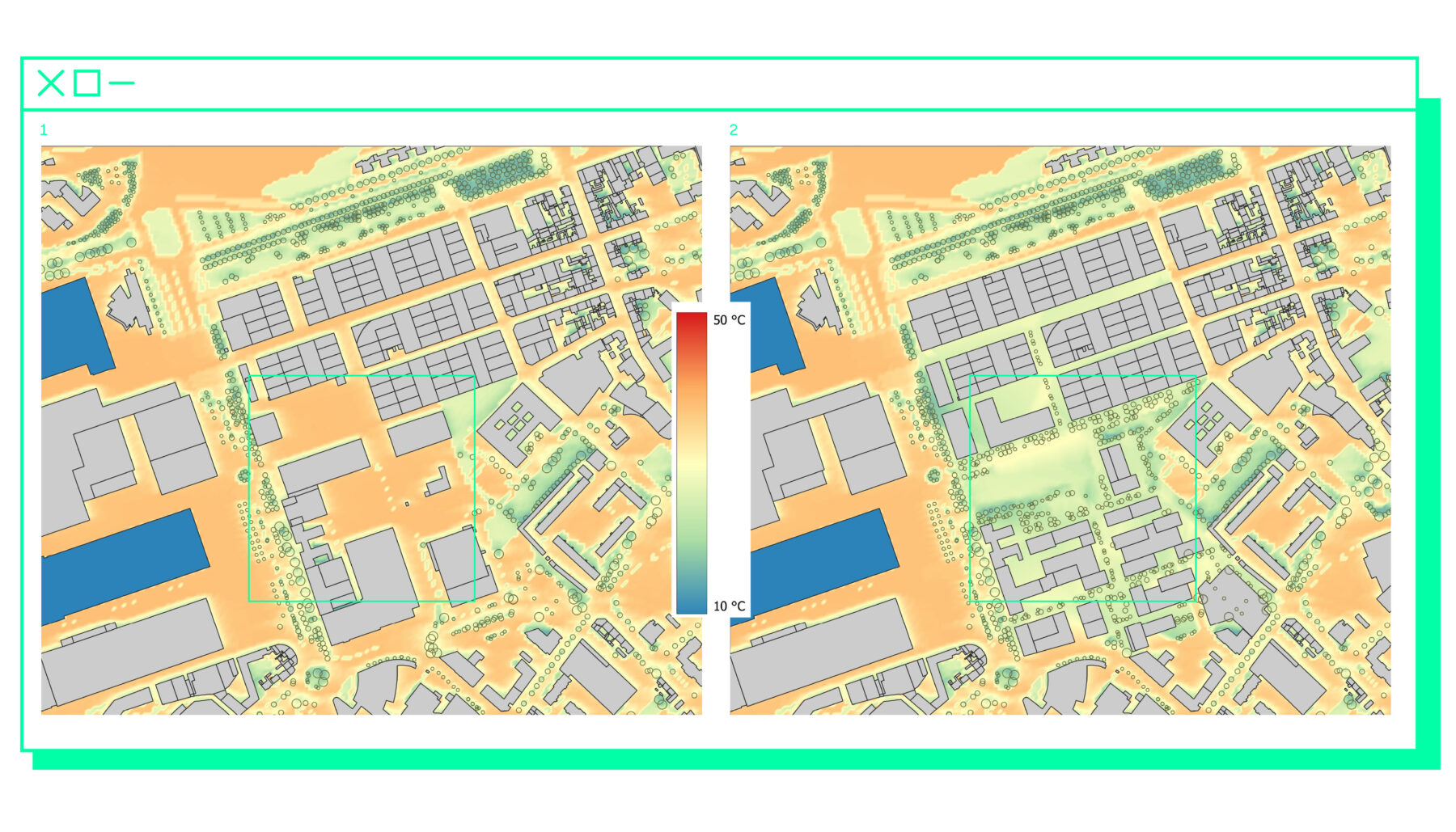
- Existing Conditions: Ground surface temperatures range from 15.4°C to 37.9°C over the simulated day of 18 August.
- Proposed Conditions: Ground surface temperatures range from 8°C to 37.3°C over the simulated day of 18 August.
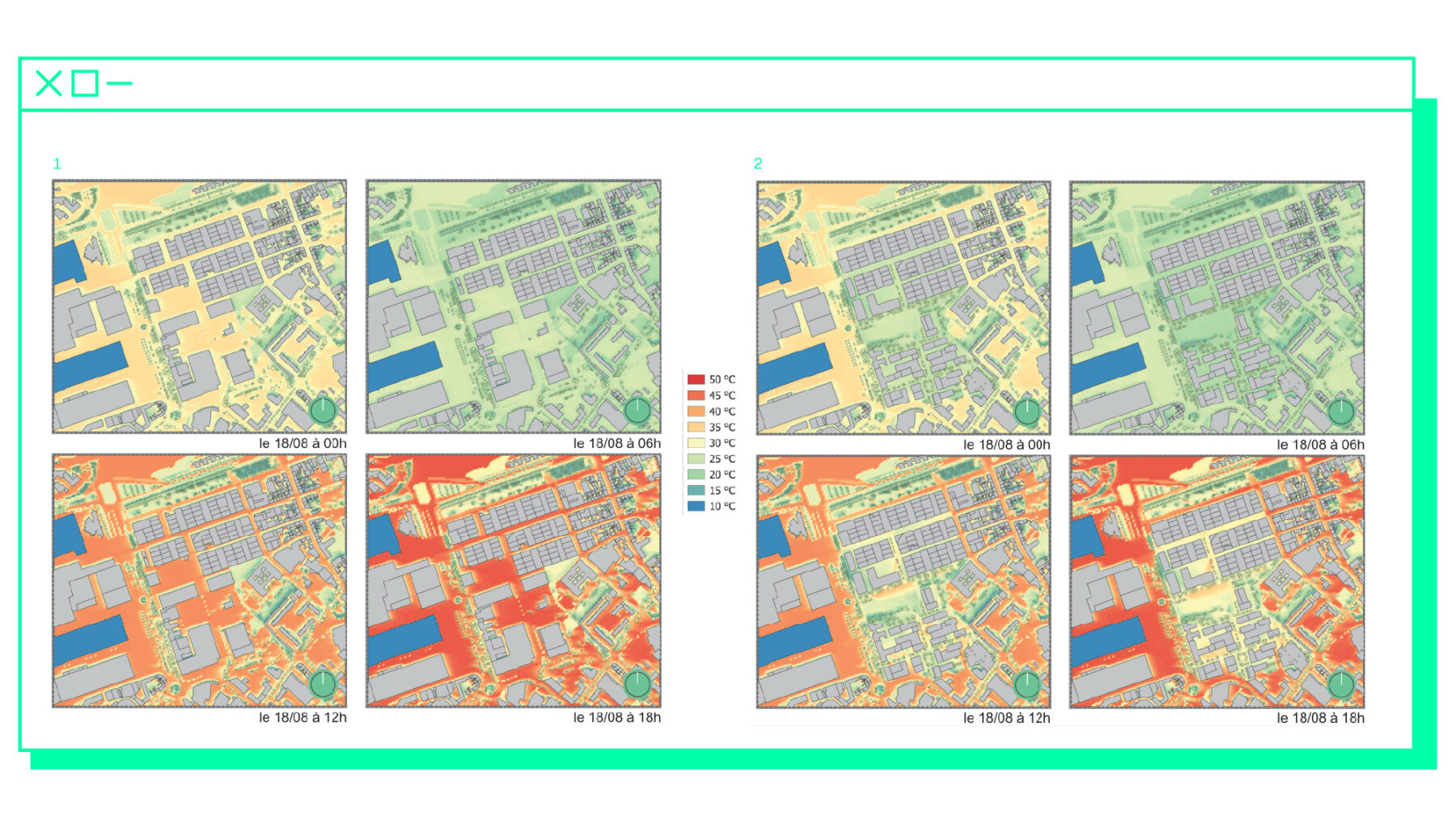
- Existing Conditions: 00:00 – 06:00 – 12:00 – 18:00
- Proposed Conditions: 00:00 – 06:00 – 12:00 – 18:00
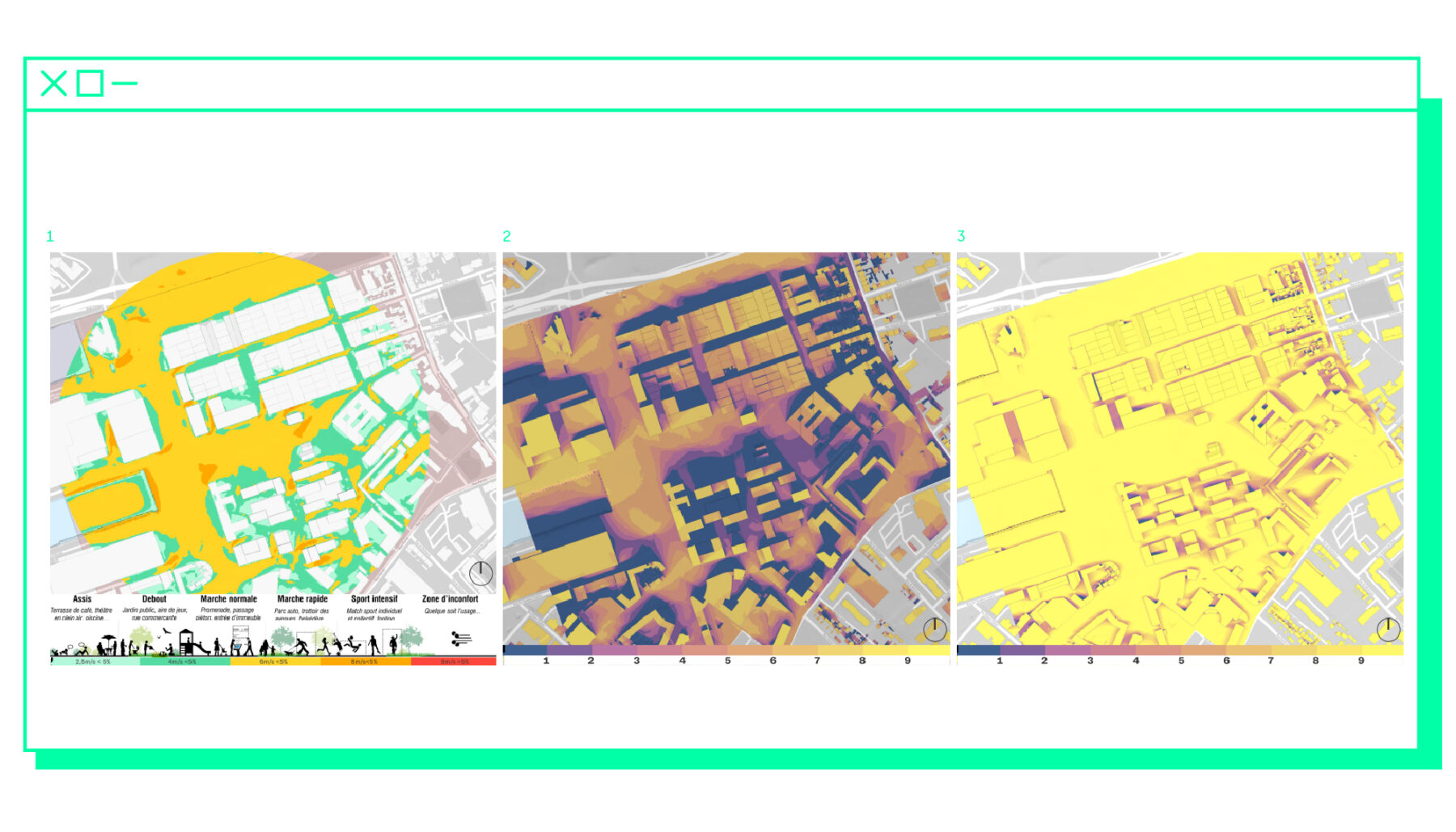
- Annual Wind Study – Assessment of Wind Comfort Across the Site Under Proposed Conditions
- Solar Exposure – 21 December – Number of Hours of Sunlight Between 00:00 and 24:00
- Solar Exposure – 21 June
The environmental strategy adopts a systemic approach structured around five complementary priorities: territorial integration, ecosystem restoration, adaptation to habitability conditions by 2050, carbon efficiency and governance. Negotiated urbanism is central to this approach, as stakeholder engagement is particularly crucial given that public authorities will retain only partial ownership of the land.
This strategy is implemented across three distinct yet complementary areas.
To the north, the intervention follows a resource-efficient approach. The heritage character of the historic docks is preserved and enhanced, while targeted improvements address everyday use: safer walking and cycling routes, the introduction of vegetation and partial soil depaving. These measures aim to make this productive urban environment more comfortable for those who work in or move through the area.
To the south, the area designated for a new residential neighbourhood will undergo extensive ecological restoration. Soil depaving and the integration of nature-based solutions – bioswales, salt-tolerant planting and ecological corridors – will help ensure the district's long-term habitability, addressing urban overheating and stormwater management challenges.
At the heart of the district, a large urban park will form a transition between the economic activities to the north and the new residential neighbourhood to the south. Conceived as a major public space for the wider Le Havre metropolitan area, the park is the centrepiece of the environmental strategy. Acting as an urban cooling oasis, a biodiversity habitat and a key component of stormwater management, it embodies the transformation of a district currently dominated by hard surfaces.
The low-carbon strategy also prioritises the reuse and enhancement of existing resources. By making use of materials already available on site, the project aims to minimise the need for imported materials and consequently reduce the carbon footprint of construction.
Finally, the project integrates coastal flooding risks from the earliest design stages. The urban masterplan establishes principles of hydraulic permeability, allowing water to flow through the district during extreme events, while ground-floor uses are carefully planned to respond to this vulnerability.
Client
Le Havre City
Team
KCAP, Phytolab, Studio Vicarini, EGIS
Surface
12.7 hectares
Schedule
In progress
AFB Team
Olivier Detroit
AFB alumni: Mohamed Benzerzour

Olivier Detroit
/ Project Lead